
by ICC Staff
How Shyla Niemi and Giigido Mikinaak Are Revitalizing Anishinaabemowin Learning
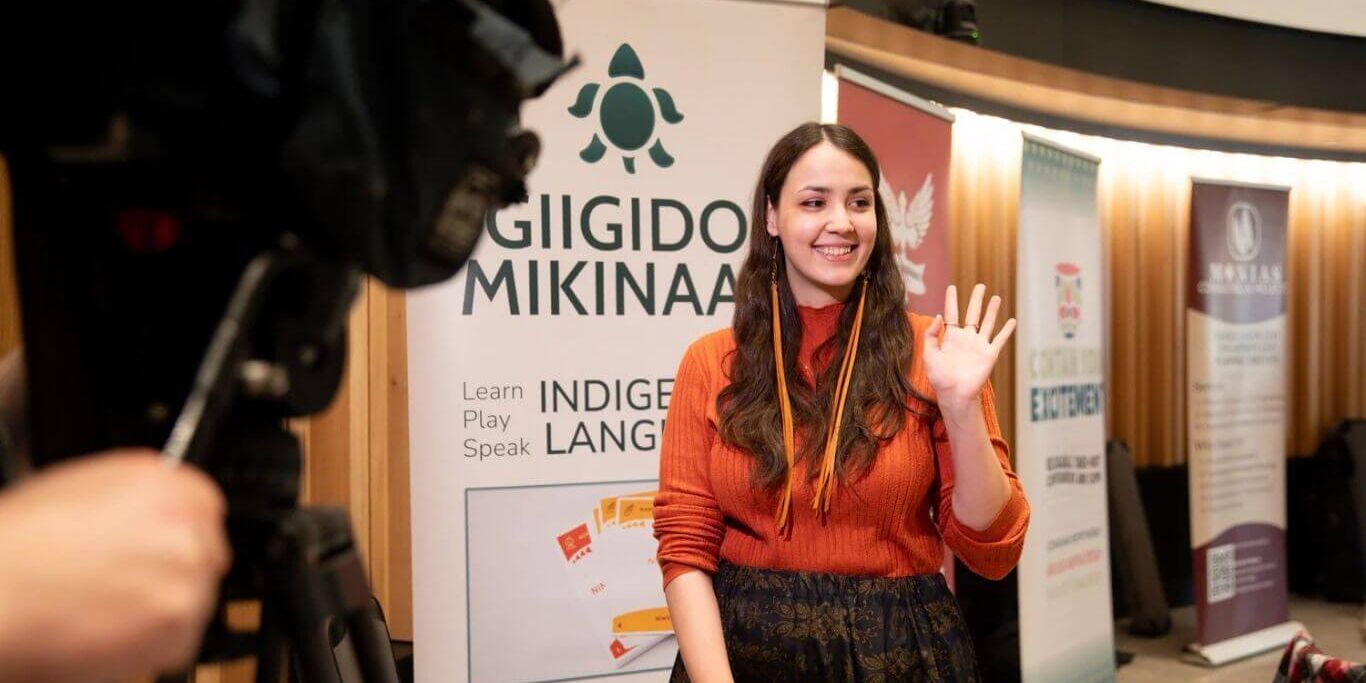
For many Indigenous entrepreneurs, business is more than economic activity, it’s also a pathway to cultural revitalization and community connection. For Shyla Niemi, the founder of Giigido Mikinaak, that pathway is deeply rooted in a personal journey of reclaiming Anishinaabemowin.
Learning Without a Roadmap
The name itself reflects Turtle Clan identity, says Niemi, grounding the business in cultural meaning from the outset. But more importantly, it’s the lived experience behind the work that shapes its impact. Beginning her language journey without access to fluent speakers, Niemi encountered a challenge familiar to many learners: how to engage with a language with limited learning resources. That early experience of uncertainty now informs her project from the ground up.
“When I design these resources, I reflect on what my younger self needed” she says. Products like the Ataage Agindaasonan card game are built with this philosophy in mind, combining audio and visual learning in a format that feels approachable rather than intimidating.
Niemi’s entrepreneurship has solidified herself as a cornerstone in the field. On the one hand, she helps connect new learners of Indigenous languages with fluent speakers. On the other hand, she also serves as a gateway between traditional culture and modernity, “it’s incredible to see all the different ways we are using our traditional knowledge in a world that tried to leave it behind” she reflects.
Where Tradition Meets Innovation
A key element of that adaptation is play. While it may seem simple, making language learning fun is a deliberate and impactful choice, according to Niemi. Generations of Indigenous peoples have experienced shame tied to cultural expression –– first from external pressures, and now, sometimes, from not knowing their own traditions. By introducing playfulness, these tools help shift that narrative.
What’s more, behind the products is a process grounded in relationship-building. Collaborating with language speakers and Elders requires time, trust, and respect. Unlike conventional business models, this work cannot be transactional. “Part of the process is building a relationship,” Niemi says, adding that “letting them know who you are, and listening to their stories” is an important step in the process.
Integrity, Balance, and Giving Back
For other Indigenous entrepreneurs looking to build businesses rooted in culture, the Niemi’s advice is clear: lead with integrity and balance. Cultural knowledge carries immense value and undervaluing it can undermine both the business and the generations who preserved that knowledge. At the same time, success should remain community oriented.
“Think about how you can give back,” she emphasizes. “Support other Indigenous professionals, artists, and suppliers.”
In a growing Indigenous economy, Giigido Mikinaak stands as a reminder that innovation and tradition are not opposites — they are partners in building a stronger, more connected future.
Niemi recently participated as a panellist in the Indigenous Chamber of Commerce’s Launching Success Luncheon. Click here to learn more about her work.
Join Our Newsletter
As Manitoba's voice for Indigenous business and your partner in economic reconciliation, we connect you to opportunities that drive change. Subscribe to receive updates on Indigenous business developments, partnership opportunities, and upcoming events delivered straight to your inbox.