by ICC Staff

Last August, the British Columbia Supreme Court released an important decision that could have lasting effects on Indigenous rights and land ownership across Canada. In Cowichan Tribes v. Canada, the court recognized that several First Nations communities, including the Cowichan Tribes, hold Aboriginal title to roughly 745 acres of land in what is now the city of Richmond, B.C.
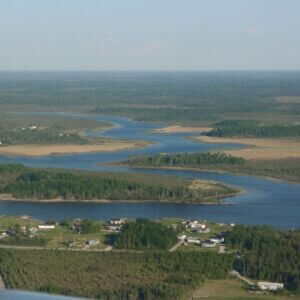
The land in question is part of the Nations’ traditional territory along the Fraser River. The court found that Indigenous title to the land existed before colonial settlement and continues to exist today, even though the land was later registered under provincial property laws.
Why This Ruling Is Especially Significant
What makes this ruling especially significant is the court’s finding that some historic Crown land grants were legally flawed. In simple terms, the court said that governments cannot ignore Indigenous land rights simply by issuing private property titles. Aboriginal title is a right that must be respected, even where land has been bought and sold for generations.
For Indigenous communities, this decision strengthens the legal foundation of land claims in areas where treaties were never signed. It confirms that long-standing relationships with the land, supported by oral histories, cultural practices, and continuous use, have constitutional protection under Section 35 of Canada’s Constitution. Many see this as a step toward meaningful reconciliation, pushing governments to negotiate land issues directly rather than relying on outdated assumptions.
Important Economic Implications
Further, the ruling also has important economic implications. It raises questions about how land development and major investments should proceed in unceded territories. Governments and businesses may now face stronger obligations to consult and negotiate with Indigenous titleholders before approving projects, which could fundamentally reshape how economic development happens on traditional lands.
What's Next for Indigenous Land Rights
The case is currently under appeal by the Province of British Columbia, the City of Richmond, and several First Nations with overlapping claims. How higher courts respond, and whether the case reaches the Supreme Court of Canada, will play a major role in determining the future of Indigenous land rights and property law.
What’s more, the case has vast implications for the Indigenous economy specifically. Should the court rule in favour of the First Nations communities, this could pave the way to greater autonomy in economic decision-making. That is, the communities in question, along with other potential communities who may decide to initiate their own land claims, are no longer subordinate to external powers; enabling the fast-tracking of Indigenous economic development according to their own terms.
Irrespective of the ruling, the case is monumental for the future of Indigenous rights with respect to property and economic development, and everyone should pay careful attention to it.
Join Our Newsletter
As Manitoba's voice for Indigenous business and your partner in economic reconciliation, we connect you to opportunities that drive change. Subscribe to receive updates on Indigenous business developments, partnership opportunities, and upcoming events delivered straight to your inbox.